

DIFFICULTIES IN MEASURING JEWELRY SIZES AT HOME
Online jewelry shopping is becoming increasingly popular due to its convenience, but alongside the advantages, there are still many difficulties that buyers often encounter, especially when choosing jewelry sizes.
Jewelry such as rings, bracelets, or necklaces require the right size to ensure comfort and aesthetics. However, when buying online, measuring at home is often inaccurate, leading to problems such as:
- A ring that is too tight or too loose can be uncomfortable to wear.
- The bracelet doesn't fit my wrist properly, making it difficult to use.
- The necklace is either too short or too long, not suitable for the wearer's style.
To overcome these difficulties when buying online, it's advisable to carefully check how to measure ring, bracelet, and necklace sizes at home before making a purchase. Below is detailed information on how to measure jewelry sizes at home:
SIMPLE AND ACCURATE WAYS TO MEASURE JEWELRY SIZE AT HOME
1. How to measure ring size
1.1. Method 1: Measuring ring size based on an existing ring
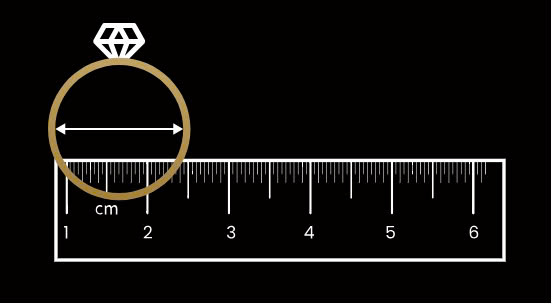
This method is useful if you already have a ring in the correct size at home.
- Step 1: Choose a ring that fits comfortably on the finger you want to wear it on.
- Step 2: Use a ruler to measure the inside diameter of the ring.
- Step 3: Compare the measured size with the standard ring size chart to determine the correct size.
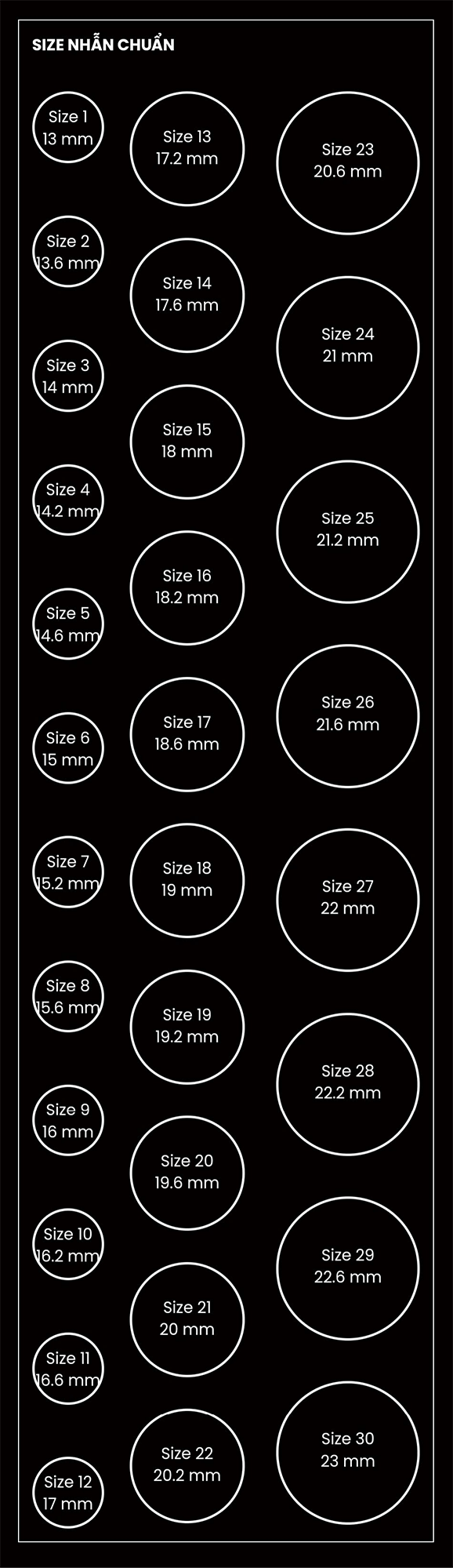
1.2. Method 2: Manual measurement using paper and ruler
This method is useful if you don't have a ring setting in the correct size at home.
Step 1: Prepare a ruler, a pair of scissors, a pen, and a piece of paper.
Step 2: Cut a strip of paper about 10 cm long and 1 cm wide.
Step 3: Use the piece of paper you just cut to wrap tightly around the finger you want to measure.
Step 4: Mark the intersection point on the piece of paper.
Step 5: Unwrap the piece of paper and use a ruler to measure the length from the end of the paper to the marked point. Divide that measurement by 3.14 to calculate the ring diameter, then compare it to the standard ring size chart in section 1.1 to find the appropriate size.
1.3. Important notes on how to accurately measure ring size
To ensure you choose the right ring size, you need to pay attention to the following factors when measuring your ring size:
- Finger size changes with temperature:
When it's cold, your fingers may appear smaller than usual. In this case, add 1 mm to the measured circumference. Conversely, when it's hot, subtract 1 mm to ensure the ring isn't too loose. If your knuckles are large, measure near the knuckle (not on the knuckle) so the ring fits easily but isn't too loose.
- The thickness of the ring affects the size:
Different types of rings, such as gold rings, silver rings, or diamond rings, come in varying thicknesses.
When measuring, you need to consider adjusting the size so that the ring fits comfortably, neither too tight nor too loose.
- Pay attention to your hand joints:
If your knuckle is larger than your finger base, measure both points. Then, choose the average size between the two measurements for a proper fit. This ensures your finger is comfortable wearing the ring without discomfort when bending or flexing your finger.
- Take multiple measurements to ensure accuracy:
Measure your ring size at least 3-4 times to eliminate errors. This will increase accuracy to 85-95%, helping you choose the perfect ring size.
2. How to measure wrist and ankle circumference
2.1. Method 1: Measuring size based on existing wrist and ankle bracelets.
Step 1: Use a ruler to measure the desired length of the bracelet.
Step 2: Compare the measured result (in cm) with the standard bracelet and anklet sizes below. Your bracelet and anklet size will correspond to the sizes below.
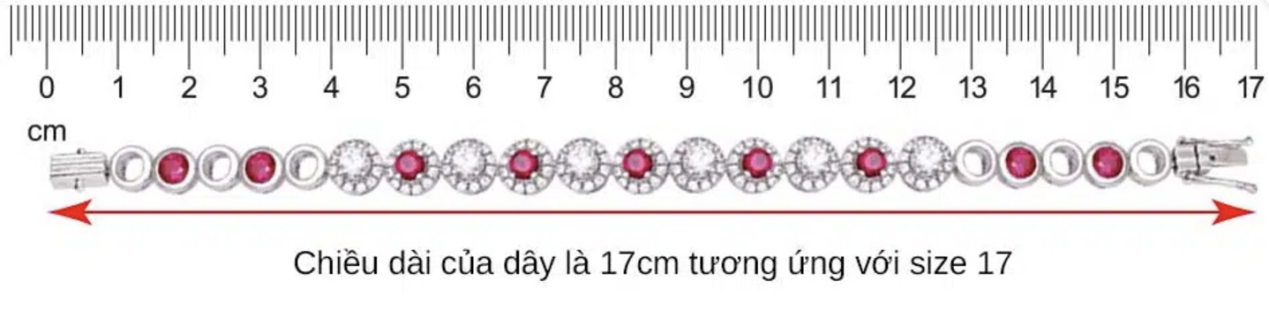
Common bracelet sizes for children: Size 14-16
14 cm - 15 cm - 16 cm
Popular bracelet sizes for women: Size 16-18
16 cm - 17 cm - 18 cm
Popular bracelet sizes for men: 19-22
19 cm - 20 cm - 21 cm - 22 cm
Common anklet sizes for children: Size 13-15
13 cm - 14 cm - 15 m
Common anklet sizes for women: Size 23-25
23 cm - 24 cm - 25 m
2.2. Method 2: Manually measuring wrist and ankle circumference
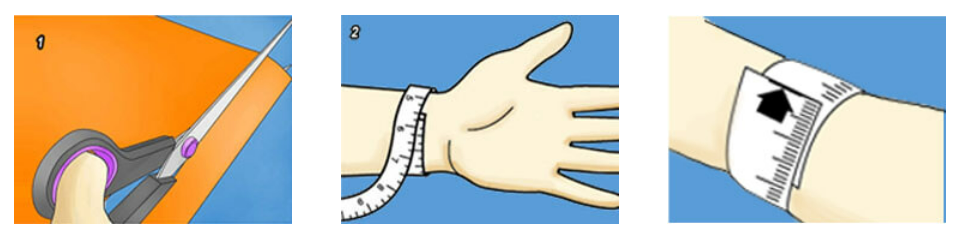
Step 1: Prepare a sheet of A4 paper and cut it lengthwise to create a narrow strip of paper, like a measuring tape.
Step 2: Use a strip of paper (or string/measuring tape) to wrap around the wrist where you want to wear the bracelet. Wrap it snugly and comfortably, and mark the point where the two ends of the strip meet with a pen or scissors.
Step 3: Straighten the strip of paper and use a ruler to measure the length from the beginning to the marked point.
Step 4: Take the length measurement (in cm) you just calculated, then compare it to the standard bracelet sizes mentioned in section 2.1 to determine the appropriate size.
3. How to measure your phone ring size
3.1. Method 1: Measuring size based on existing measurements

Step 1: Use a ruler or measuring tool to measure the inside diameter of the bracelet you own (if you have one). Place the measurement horizontally across the bracelet so that it passes through the center of the circle for maximum accuracy.
Step 2: Take the resulting diameter (in mm) and compare it to the following common ring sizes:
Common bracelet sizes for children: Sizes 36-46
36 mm - 38 mm - 40 mm - 42 mm - 44 mm - 46 mm
Common ring sizes for women: Size 50-54
50 mm - 51 mm - 52 mm - 53 mm - 54 mm
Common ring sizes for men: Size 55, 60
55 mm - 60 mm
From the diameter of your wrist, you can determine the size of bracelet you need.
Note: If you don't have a ready-made bracelet to measure, you can use a piece of wire to wrap around your wrist, then measure the length of the wire with a ruler to estimate the bracelet size.
3.2. Method 2: Manual loop making

For Round Rings:
Step 1: Cut a sheet of A4 paper along its long edge to create a measuring tape.
Step 2: Use a piece of paper (string/measuring tape, etc.) to wrap around the wrist where you will wear the bracelet. Make sure it's a comfortable size. Use a pen to mark or scissors to cut the point where the two ends meet.
Step 3: Unfold the piece of paper and use a ruler to measure the length from the starting point to the marked point.
Step 4: Divide the measured value by 3.14 to get the ring diameter.
Step 5: Compare the calculated diameter (in mm) with the common bracelet sizes listed in section 3.1 above. Your bracelet size corresponds to the number written below the circle.
For Oval-shaped rings:
You can measure the width of your wrist; your bracelet size (in mm) is the number written below the circle in the image above.
4. How to measure necklace size
4.1. Method 1: Measuring based on existing production lines
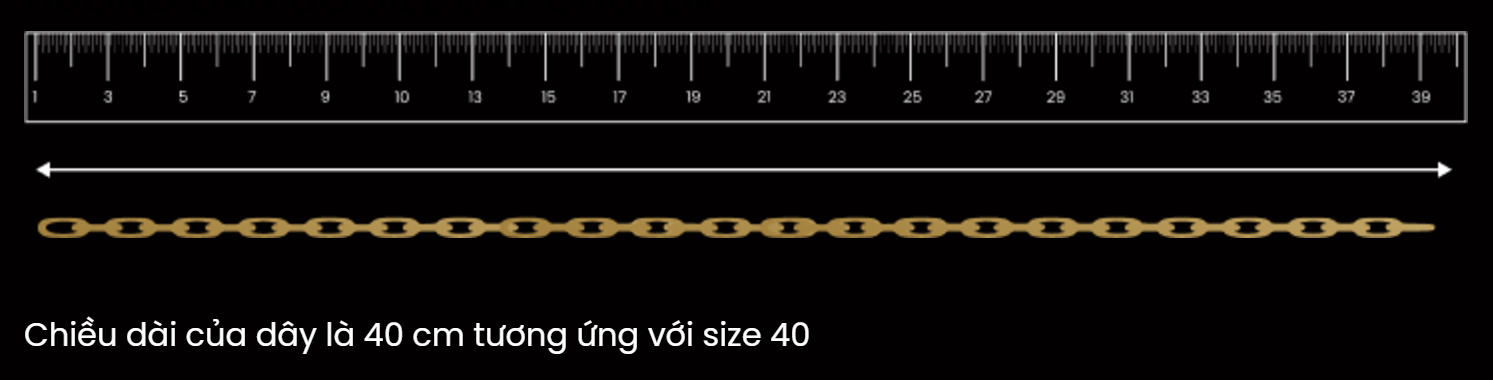
The most accurate way is to use a necklace with a similar width and style to the one you intend to buy and follow these steps:
Step 1: Use a ruler to measure the length of the string.
Step 2: After obtaining the measurement, compare the number of centimeters on the ruler with the corresponding measurements in the image below. Your necklace size is the size corresponding to the number of centimeters shown in the image.
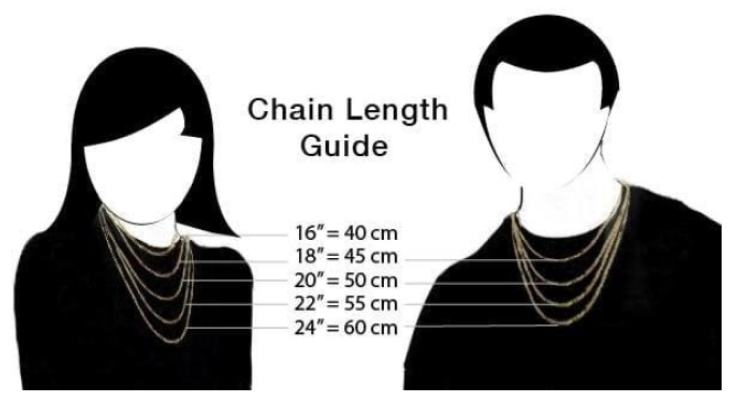
4.2. Method 2: Manual measurement of necklace size
If you don't have a necklace of the same size you want to buy to measure, you can try this method. While this method won't give perfectly accurate results, it's still usable.
Step 1: Cut a sheet of A4 paper into a long strip.
Step 2: Use the cut piece of paper to wrap around your neck, following the desired necklace length, and cut the paper at the point where it meets the string.
Step 3: Measure the length of the string using a ruler, just like you would measure a ring or other jewelry.
Step 4: After obtaining the measurement, compare the number of centimeters on the ruler with the size chart in Figure 4.1 above.
CONCLUDE
After you have measured your jewelry size at home, a C Jewelry Diamond consultant will confirm and contact you for detailed advice to ensure that your needs regarding design and other requirements are met.
With these simple instructions on how to measure ring, bracelet, necklace, and chain sizes at home, buying jewelry online will now be easier for you. You will no longer have to worry about buying jewelry that doesn't fit, is the wrong size, and wasting time and effort on exchanges and returns. C Jewelry Diamond hopes this article will be truly helpful to you.
Follow C Jewelry Diamond to learn more about diamond jewelry and see the latest designs.