

The history of the Diwali festival
Diwali, also known as the Festival of Lights, is one of the most important events in India, celebrated around October each year. Beyond being a religious festival, Diwali is also an occasion to showcase a unique blend of religion and culture. Literally meaning " a series of rays of light ," it lasts approximately five days to celebrate the glorious victory of good over evil and darkness.
The Vedas recount that in ancient times, India was the kingdom of Ayodhya. During the exile of Prince Rama (an incarnation of the god Vishnu) and his wife Sita (an incarnation of the goddess Lakshmi), Sita was abducted by the demon king Ravan. With the help of the monkey god Hanunam, Rama defeated the demon king and rescued his wife. For some Hindus, Diwali marks the joyful return of Rama and Sita to their kingdom after 14 years of exile.
That's also why lighting lamps and candles has become a central symbol of Diwali. Activities during the holiday include cleaning and decorating homes, exchanging gifts, and offering prayers to the gods. In addition, an indispensable element is the feast filled with delicious traditional dishes. People wear colorful clothing and participate in fun activities, dancing, and music to celebrate.
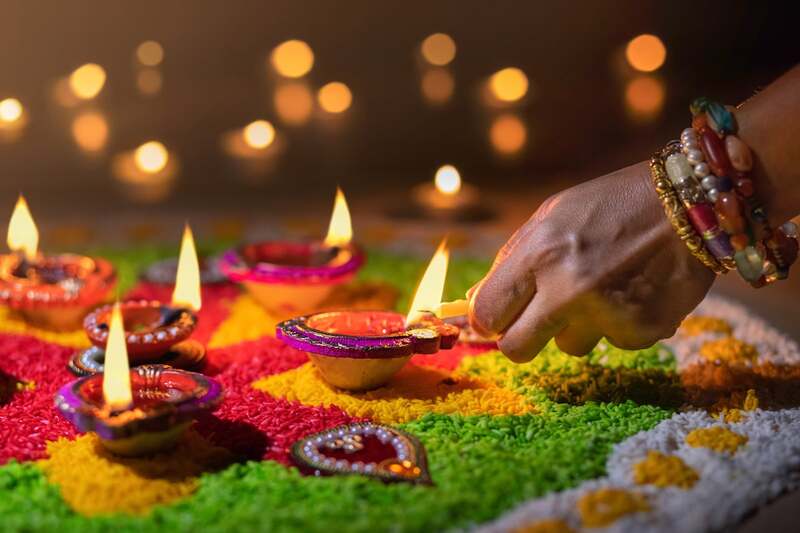
Lighting diyas (clay lamps) and making rangoli (colorful floor decorations) are traditional customs of Diwali.
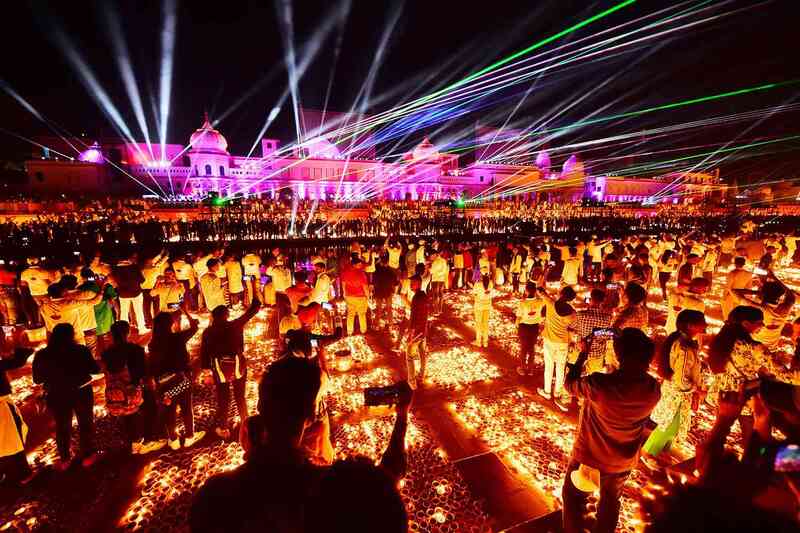
Light flooded the entire festival space. Photo: Sanjay Kanojia/AFP via GETTY
2. The timing of the Diwali festival
The Diwali Festival of Lights is held annually in the autumn, usually between October and November. It lasts approximately five days, with the main celebration on Tuesday. Here are some travel tips for India , specifically the following timeframes:
Dhanteras: The first day of Diwali is often marked by purchasing new gold and silver jewelry, utensils, and other household items for good luck. Many people also perform a house cleaning to seek the blessings of Lakshmi, the goddess of wealth and prosperity. Others often honor Dhanvantari, a deity of Ayurveda, and Yamaraj, the god of death, on this day.
Choti Diwali, or Naraka Chaturdashi: The second day of Diwali marks Krishna's defeat of the demon king Narakasura. People wake up early to bathe and wash their hair, and they also clean their houses, decorate with rangolis and diyas, and prepare sweets.
Diwali, or Lakshmi Puja: The third day of the Diwali festival is commonly known as Diwali. During this time, families gather to exchange gifts, enjoy delicious food, and indulge in sweets. Many Hindus also worship the goddess Lakshmi on this day.
Padwa, or Govardhan Puja: This day is dedicated to honoring the relationship between husband and wife, and married people often buy a gift for their spouse. According to some traditions, this occasion commemorates the day Krishna raised Govardhan Hill to protect the villagers of Vrindavan from the rains caused by Indra's wrath. Some devotees offer a mountain of food to Krishna in remembrance, while others create clay and cow dung statues to reenact the event.
Bhai Dooj: The final day of the Diwali festival celebrates sibling love, honoring the relationship between Yama and his younger sister Yami (or Yamuna). Women sometimes place a tilak or red mark on their brother's forehead, while brothers give gifts to their younger sister.
| Year |
Diwali Day |
| 2023 |
Sunday, November 12th |
| 2024 |
Friday, November 1st |
| 2025 |
Monday, October 20th |
| 2026 |
Sunday, November 8th |
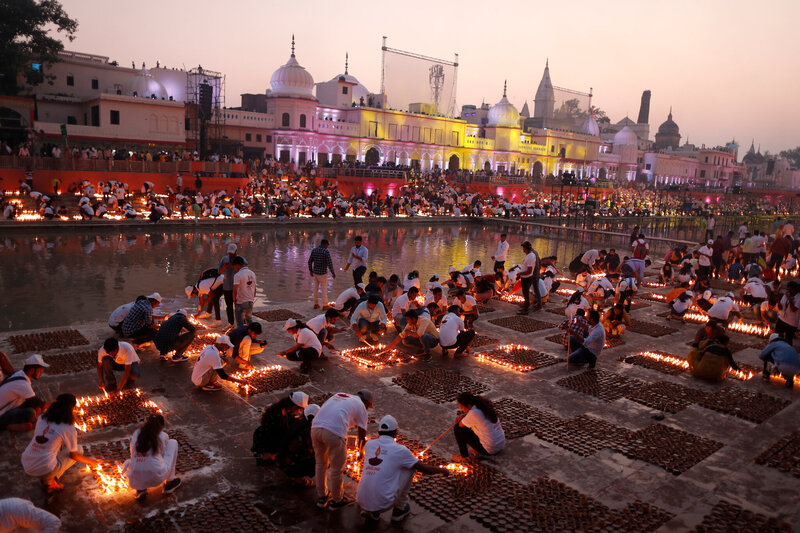
The meaning of Diwali is to show how light can conquer darkness.
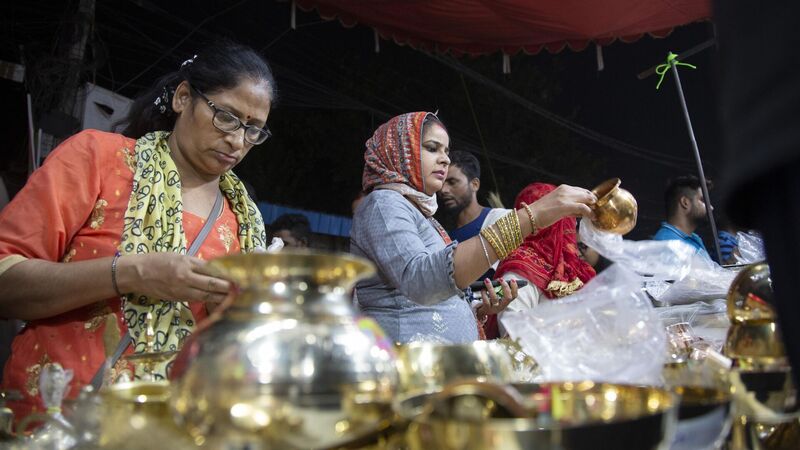
Dhanteras marks the beginning of a five-day festival of lights and is believed to bring wealth and increase opportunities for riches. Photo: AP/Bhumika Saraswati
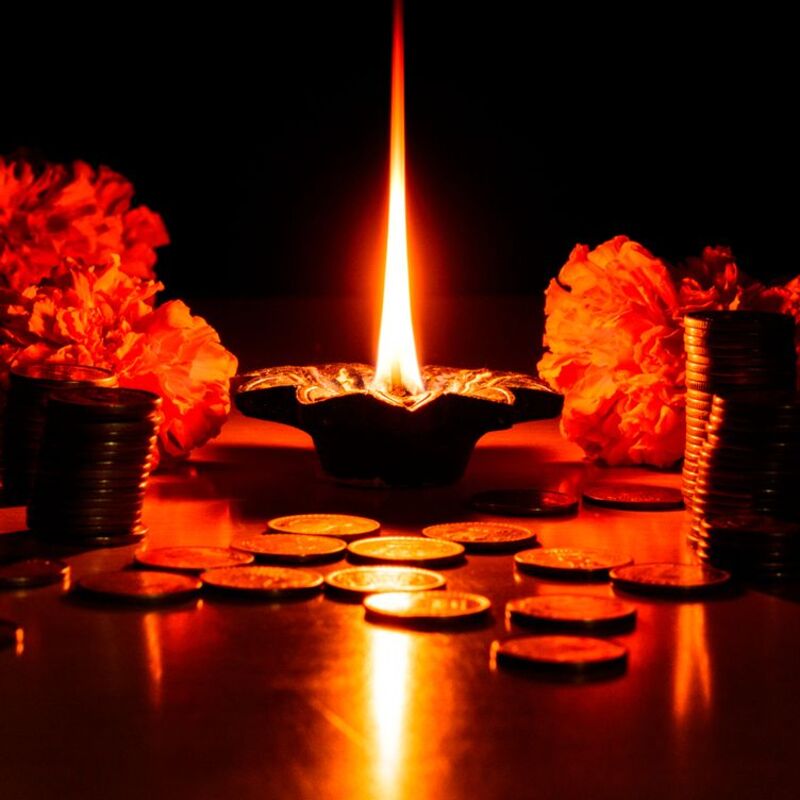
Gold and silver are not only considered auspicious purchases but also possess the power to ward off negative energy.
3. The meaning and organization of the Diwali festival
3.1 What is the significance of the Diwali festival of lights?
Diwali is celebrated by most Hindus, Sikhs, Jains, and Buddhists, but like Christmas, it is now also embraced by many non-Muslims. The meaning of the festival often varies depending on the community and region. One of the central themes of Diwali comes from the Hindu epic, the Ramayana, as recounted in historical accounts.
Some Hindus in southern India celebrate Krishna's defeat of Narakasura, which led to the rescue of 16,000 girls held captive by demons. In western India, the Diwali festival commemorates the day the god Vishnu expelled the demon king Bali, who ruled the underworld.
Sikhs celebrate this occasion as “Bandi Chhor Divas” (Day of Liberation), marking the day Guru Hargobind, the sixth Hindu guru, and 52 Hindu kings were freed from unjust captivity. Mughal Emperor Jahangir initially agreed to release Guru Hargobind, but the guru refused to leave without the king. After Jahangir declared that only those who could keep the guru's robe could leave, Guru Hargobind tied 52 tassels to his robe so that each ruler could be set free.
For Jains, Diwali is the day Mahavira, their last spiritual leader, died physically and attained enlightenment. Some Buddhists acknowledge Diwali as the day Emperor Ashoka embraced Buddhism.
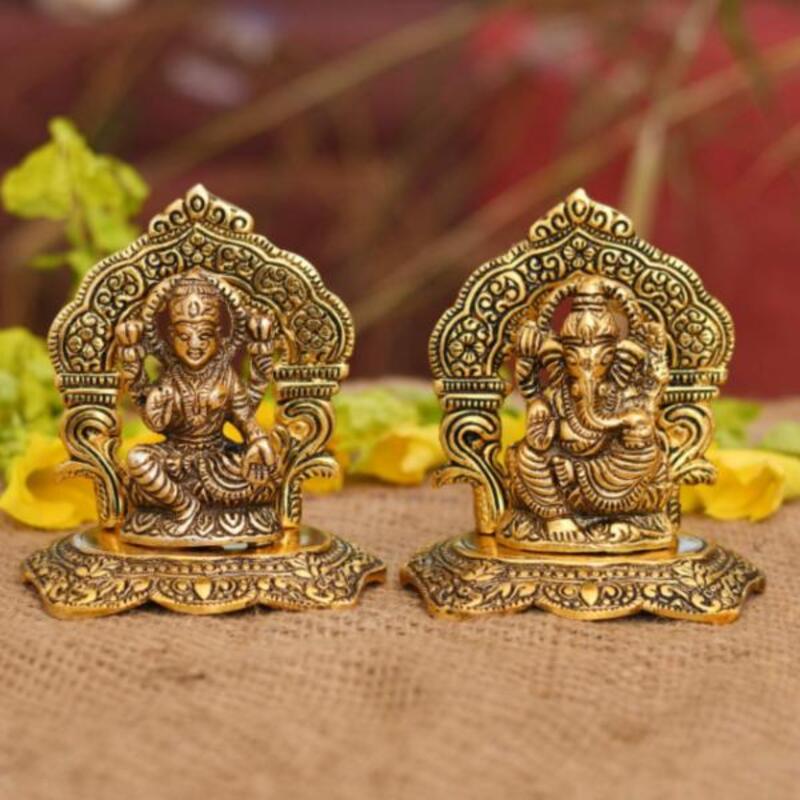
Diwali is a festival that honors the goddess Lakshmi and the god Ganesh.
3.2 How is Diwali celebrated?
Beyond the common traditions of decorating homes, setting off fireworks, and enjoying delicious food, Diwali is celebrated in many other ways. In some parts of India, people play card games such as teen patti, blackjack, and poker. Gambling during the holiday is considered auspicious, stemming from a legend in which the god Shiva and his consort Parvati play a game of dice. Diwali also marks the beginning of the Hindu New Year, and many businesses and merchants open new accounts during the holiday.
Furthermore, the exchange of heartfelt gifts during Diwali has become an obligatory part of the celebration. Friends, family, and colleagues share gifts as a gesture of love and affection. Additionally, according to Travel experiences , special and extravagant parties with delicious food often including various kinds of sweets are also a special attraction of this occasion.
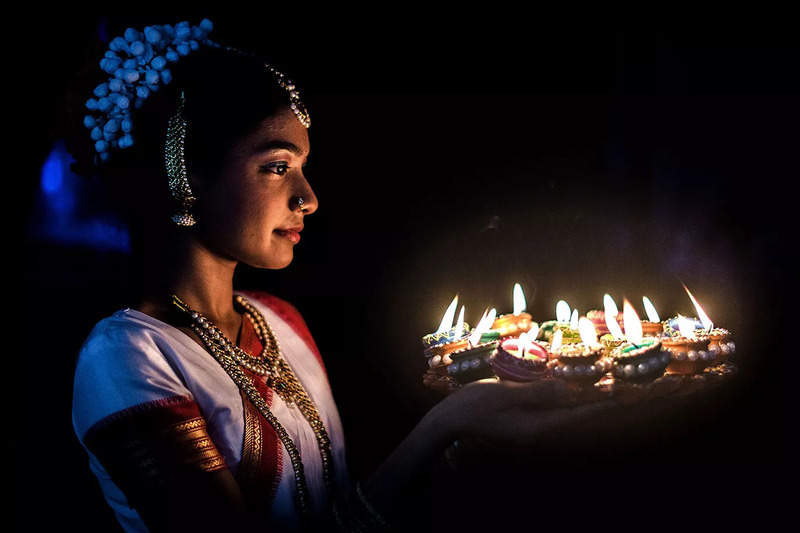
Diwali is considered the biggest holiday in Hinduism, but over the centuries it has also become a national festival for the non-Hindu community. Photo: Rajesh Jantilal/AFP via Getty
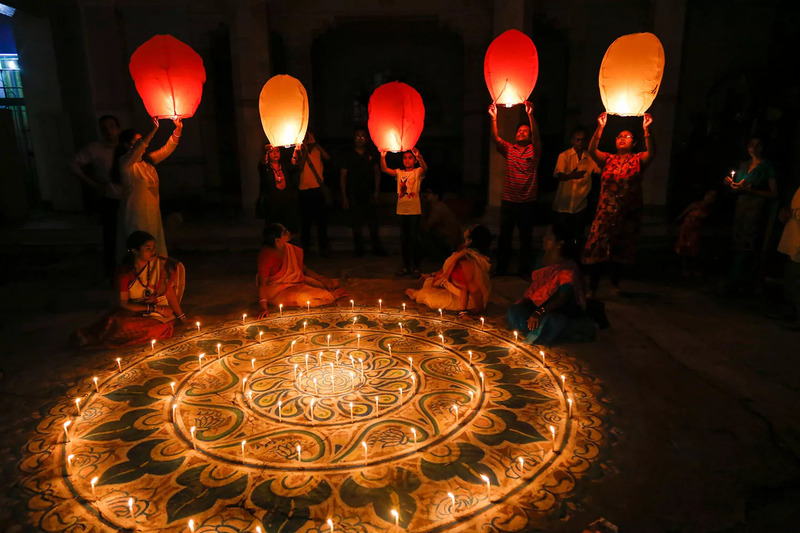
To celebrate, followers of the faith will light up their homes with candles, lamps, and fireworks. Photo: Suvankar Sen/Pacific Press/Lightrocket via Getty
4. Things to note when participating in the Diwali festival
Respect the culture and beliefs of the indigenous people: The Diwali festival of lights holds profound religious and cultural significance. Therefore, You need to follow the rules, customs, and beliefs of the local people to show respect and have a more meaningful experience.
Ensure safety regulations are met: The Diwali festival is famous for its lit candles and lanterns. When lighting lanterns, you must follow safety regulations, avoid lighting them near flammable materials, maintain a safe distance, and extinguish them when you are no longer nearby. This is also a way to ensure the safety of everyone around you as well as yourself.
Traditional clothing: You can wear traditional clothing to enjoy Diwali, showing respect while fully participating in the festival.